A check-engine light can be stressful, especially when you are unsure whether it is safe to keep driving. Sometimes the cause is minor, such as a loose gas cap. In other cases, the warning may indicate a problem with the engine, ignition system, emissions equipment, transmission, or another important vehicle system.
If your check-engine light is on in St. Louis, Overland, St. John, or nearby communities, Jammin’ J Auto & Tire can help identify the cause and explain your repair options.
Call Jammin’ J Auto at 314-423-3876 or visit us at 10188 Page Ave, Overland, MO 63132.
What Does the Check-Engine Light Mean?
The check-engine light is connected to your vehicle’s onboard diagnostic system. When the computer detects a problem, it stores a diagnostic trouble code and turns on the warning light.
The light does not identify the exact repair by itself. It indicates that your vehicle needs further testing.
A check-engine light may be related to:
- Engine performance
- Fuel delivery
- Ignition components
- Oxygen sensors
- Catalytic converter efficiency
- Evaporative emissions systems
- Exhaust components
- Transmission operation
- Electrical or computer-controlled systems
The same warning light can be triggered by many different issues. Replacing parts without properly testing the vehicle can lead to unnecessary expense.
What Is the Difference Between a Solid and Flashing Check-Engine Light?
Solid check-engine light
A solid light generally means the vehicle has detected a problem that should be diagnosed soon. Your vehicle may still drive normally, but ignoring the warning can allow a small issue to become more expensive.
Schedule a diagnostic appointment if:
- The light remains on
- Your vehicle is running roughly
- Fuel economy has decreased
- The engine feels weaker than usual
- You notice unusual smells or noises
- The vehicle is difficult to start
Flashing check-engine light
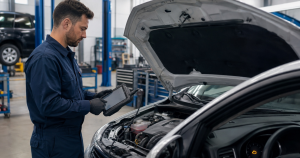
A flashing check-engine light can indicate a more serious problem, such as an active engine misfire. Continuing to drive may cause additional damage, especially to the catalytic converter or engine.
If the light is flashing, reduce driving as much as possible and contact an auto repair professional for guidance.
If the vehicle is shaking, losing power, overheating, smoking, or displaying additional warning lights, pull over safely and arrange for assistance.
Can a Loose Gas Cap Cause the Check-Engine Light?
Yes. A loose, damaged, or missing gas cap can sometimes trigger an evaporative emissions warning.
If you recently filled your tank and the light appeared afterward:
- Turn the vehicle off.
- Remove and reinstall the gas cap.
- Make sure it is tightened securely.
- Drive normally for a few trips.
- Have the vehicle diagnosed if the light remains on.
Do not assume the gas cap is the cause if the light stays on or if the vehicle is running poorly. A proper diagnostic test is the best way to identify the actual problem.
Common Causes of a Check-Engine Light
Ignition misfire
Worn spark plugs, failing ignition coils, or other ignition problems can cause an engine to misfire. Drivers may notice:
- Rough idling
- Shaking
- Reduced acceleration
- Poor fuel economy
- A flashing warning light
Oxygen sensor problem
Oxygen sensors monitor the mixture of fuel and air in the exhaust. A faulty sensor can affect fuel economy and emissions performance.
Catalytic converter issue
The catalytic converter helps reduce harmful exhaust emissions. Problems may be connected to age, contamination, misfires, or other engine issues.
Evaporative emissions leak
A leak in the fuel-vapor system can trigger the check-engine light. The cause may be a gas cap, hose, valve, or another component.
Air or fuel delivery problem
The engine requires the correct balance of air and fuel. Problems with sensors, injectors, filters, or related components may affect performance.
Battery or electrical issue
Low voltage, charging-system problems, wiring faults, or computer communication issues can sometimes produce warning lights or diagnostic codes.
Transmission-related fault
In some vehicles, the check-engine light may be connected to transmission operation. Symptoms can include hard shifting, delayed engagement, slipping, or unusual noises.
Why Diagnostic Testing Matters
A diagnostic code is a starting point—not always a complete diagnosis.
For example, a code related to an oxygen sensor does not automatically mean the sensor needs to be replaced. The underlying cause could involve:
- A vacuum leak
- An exhaust leak
- A wiring problem
- A fuel mixture issue
- Another failing component
At Jammin’ J Auto, our technicians follow a diagnostic process to help clarify what your vehicle needs. We can inspect the vehicle, test related systems, and explain the findings before repair work is performed.
Our digital vehicle health check can also help document concerns with photographs and provide information through text or email.
What Happens During a Check-Engine-Light Diagnosis?
When you bring your vehicle to Jammin’ J Auto, the process may include:
- Discussing the symptoms and vehicle history
- Performing an initial inspection
- Test-driving the vehicle when appropriate
- Checking diagnostic trouble codes
- Testing related components and systems
- Reviewing the findings with you
- Providing an estimate and time expectation
- Getting your approval before additional repairs
- Keeping you updated as work progresses
If additional repairs are discovered, Jammin’ J Auto communicates with customers before performing work that changes the original estimate.
Can I Drive With the Check-Engine Light On?
It depends on the symptoms and whether the light is solid or flashing.
You may be able to drive a short distance to a repair shop if:
- The light is solid
- The vehicle is driving normally
- There is no overheating
- There is no loss of power
- No other serious warning light is active
Stop driving and seek assistance if:
- The light is flashing
- The engine is shaking severely
- The vehicle has very little power
- You smell fuel or burning material
- The engine is overheating
- Smoke is visible
- Oil pressure or temperature warnings appear
When in doubt, call an auto repair professional before continuing to drive.
Check-Engine-Light Diagnosis Near Overland and St. Louis
Jammin’ J Auto & Tire is a family-owned auto repair shop serving Overland and surrounding St. Louis communities. Our services include diagnostics, engine repair, brakes, tires, maintenance, heating and cooling, electrical repair, transmissions, and Missouri safety and emissions inspections.
We focus on explaining what your vehicle needs and making only the repairs that are approved.
Visit Jammin’ J Auto & Tire
Address: 10188 Page Ave, Overland, MO 63132
Phone: 314-423-3876
Hours: Monday–Friday, 7:59 a.m.–5:29 p.m.
Saturday–Sunday: Closed
Contact Jammin’ J Auto today to schedule a check-engine-light diagnosis.
Frequently Asked Questions
How much does a check-engine-light diagnosis cost?
The cost depends on the vehicle, symptoms, and testing required. Contact Jammin’ J Auto for current diagnostic pricing and appointment availability.
Will the check-engine light turn off by itself?
It may turn off if the vehicle no longer detects the issue, but the stored code may remain. If the light returns, stays on, or the vehicle has symptoms, schedule a professional diagnosis.
Can a check-engine light cause a Missouri inspection failure?
A vehicle with an active emissions-related fault may not pass inspection. If your vehicle has an upcoming Missouri safety or emissions inspection, have warning lights diagnosed in advance.
Should I disconnect the battery to turn off the light?
Disconnecting the battery may erase useful diagnostic information and will not repair the underlying problem. It may also reset vehicle monitors needed for an emissions inspection.
Does Jammin’ J Auto repair all makes and models?
Jammin’ J Auto provides diagnostic and repair services for many domestic, Asian, and European vehicles. Contact the shop with your vehicle’s year, make, model, and symptoms to discuss your needs.