
A humming or growling sound from a moving car can come from a wheel bearing, a tire, or another part of the vehicle. The sound alone rarely proves the cause. For drivers in Overland and the St. Louis area, understanding the clues helps them describe the problem and arrange a focused inspection before replacing parts. Jammin J Auto lists wheel-bearing service among its repair offerings. This guide explains what a technician looks for and why a safe diagnosis matters.
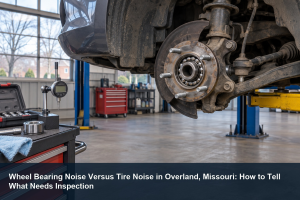
Why the two noises are easy to confuse
Both tire tread and wheel bearings rotate with road speed. A worn bearing may produce a low hum, rumble, or growl that grows louder as the car moves faster. Uneven tire wear can sound similar, especially on coarse pavement. A driver may hear the sound through the floor rather than at one precise corner. Wind, engine speed, and traffic can hide or amplify it. The useful first question is not “Which part is bad?” but “Under which conditions does the sound change?” The answer helps narrow the inspection, but a road test and physical check remain important. More than one condition can exist at the same time.
Describe speed, road surface, and turning behavior
Notice the speed at which the sound begins, whether it follows vehicle speed or engine rpm, and whether it changes on smooth versus rough pavement. A tire pattern can be more obvious on certain road surfaces. Bearing noise sometimes changes when the vehicle’s weight shifts through a turn, but that clue is not definitive and should not be tested with abrupt steering. Tell the shop whether the sound changes when you brake, accelerate, coast, or travel in rain. A short recording may help if the problem is intermittent, though microphone audio can distort where a noise seems to originate. The technician still needs to reproduce it safely.
What a tire inspection can reveal
A technician can inspect tread depth across the tire, look for cupping or feathering, and check for bulges, cuts, exposed cords, or embedded objects. Uneven patterns can point to alignment, inflation, balance, suspension, or rotation issues. Tires that have developed irregular wear may remain noisy even after the underlying condition is corrected. That is why simply moving a noisy tire or replacing a bearing without checking the tread may leave the complaint unresolved. The shop should also compare tire size and condition across an axle and check pressure against the vehicle placard when tires are cold. Tire safety takes priority over noise reduction.
What a bearing inspection can reveal
Depending on the vehicle, a wheel bearing may be part of a hub assembly or a serviceable bearing system. A technician may check for play, roughness during rotation, heat, or a sound captured with appropriate diagnostic equipment. Yet some failing bearings are noisy before obvious looseness appears. Brake drag and other wheel-end problems can also produce heat or sound, so the surrounding assembly matters. A trained inspection should consider wheel mounting, brakes, axle components, and suspension as well as the bearing itself. A diagnosis should name the affected location and explain the evidence. “It sounds like a bearing” is a starting hypothesis, not a complete finding.
Why a quick driveway spin is not enough
A wheel that spins quietly while lifted may still make noise under the weight of a moving vehicle. Conversely, a tire can make a strong road hum while the bearing feels normal on a lift. Road-test conditions, tire load, and steering forces change the sound. Lifting a vehicle also requires proper equipment and safety procedures; a casual check at home can be dangerous. The most useful professional process combines the driver’s observations, a controlled road test when safe, visual checks, and wheel-end inspection. If the vehicle has severe wobble, grinding, heat, or unstable handling, ask the shop whether it should be driven at all.
Other faults that can imitate either sound
A dragging brake, damaged CV joint, differential, transmission, or loose underbody part can create a speed-related noise. Some problems change with acceleration or deceleration rather than with steering. A brake problem may add pulling, odor, or unusual heat. A CV joint often produces a distinct clicking in certain turns, but symptoms can overlap. The point is not to diagnose a complicated vehicle from a list. It is to avoid assuming the first familiar label is correct. Tell the technician about vibration, steering feel, recent pothole impacts, tire changes, and any warning lights. These details help separate a wheel-end concern from a drivetrain or brake concern.
How the shop should explain a repair recommendation
A clear estimate identifies the side or axle, the part or assembly, associated hardware when required, labor, and any inspection findings that led to the choice. Ask whether the tire wear also needs attention and whether an alignment or suspension problem contributed. If a noisy tire is worn beyond safe use, the repair conversation may involve both tire replacement and correction of the cause. If a bearing is confirmed, ask whether it comes as a hub unit and whether the opposite side is currently healthy. Replacing parts in pairs is not automatically required; condition, vehicle design, and cost matter. Good documentation makes the recommendation understandable.
Safety signs that justify prompt attention
A new humming sound deserves an inspection, particularly when it is growing louder. Seek prompt professional advice if it is accompanied by wheel looseness, severe grinding, a burning smell, abnormal wheel heat, tire bulges, loss of control, or warning lights. Do not keep driving to see whether it goes away if the vehicle feels unstable. A technician can advise whether towing is safer. A tire defect and a failed bearing carry different risks, but both can affect control. Even when the vehicle seems to drive normally, a progressive wheel-end fault can become more expensive and less safe if ignored. Early diagnosis gives more options.
Road and weather conditions around St. Louis
Potholes, curb strikes, winter road conditions, and long highway commutes can reveal or worsen existing tire and suspension problems. They do not by themselves prove a bearing has failed. After a hard impact, note when the noise began and whether the steering wheel now vibrates or the car pulls. Missouri weather can also change tire pressure, which may affect handling and wear. A local shop can use the route and timing you describe to reproduce the concern. Avoid an aggressive road test on your own; ordinary driving observations are enough to start a useful inspection.
A practical plan for the Overland driver
Write down the first date you noticed the sound, the speeds at which it occurs, and whether turning or pavement changes it. Check for obvious tire damage without touching hot parts or lifting the car. Arrange an inspection and ask the shop to evaluate both tire condition and wheel-end components. Once the cause is identified, review the estimate and ask which work is safety-critical now and which work can be scheduled. Keep the repair record and monitor whether the noise disappears after service. If the sound remains, tell the shop exactly when it occurs so the diagnosis can continue instead of assuming another replacement will solve it.
Start with the decision this topic answers
The key decision is whether the sound comes from the tire, the bearing, or another wheel-end component. A driver can describe when it occurs, while the shop confirms the source through a safe test and inspection. A sound plan begins with a specific decision. State the problem in ordinary language, describe what has already happened, and identify the result you hope for. That gives the professional or service team a chance to distinguish a routine request from one that needs a different path. Keep expectations proportional to the information available: a web page can explain options, but the details of each situation still matter. The most efficient first conversation focuses on the next verifiable step rather than a promised outcome.
Bring the evidence that changes the answer
Bring the tire age or recent installation date, any alignment or suspension invoices, and a timeline of the noise. Note whether it began after a pothole, curb strike, brake repair, or tire rotation. Good decisions rely on records that can be checked. Dates, symptoms, measurements, prior work, service agreements, financial records, or system reports can change the recommendation. Collect what is relevant and keep a simple timeline, including what changed and when. If an important fact is unknown, say so instead of guessing. A professional can then decide what to inspect, request, or test. This avoids a common problem: spending money on a solution chosen from a label alone before confirming the underlying cause.
Compare options on the same basis
Compare a tire recommendation and a bearing recommendation by the specific evidence for each. A worn tread pattern, heat, wheel play, or measured roughness has more value than a guess based on volume alone. Comparisons are useful only when the choices address the same goal. Ask what each option includes, what it excludes, who performs the work, and which conditions would make it unsuitable. Consider the effect on time, convenience, future maintenance, and the ability to change course. A lower initial price or faster appointment may be sensible, but only if it solves the actual problem. Written scope and clear questions make tradeoffs visible. If two recommendations conflict, ask which facts or assumptions are different before deciding that one is wrong.
Follow a clear sequence
Begin with symptom history and a visual tire check, then a road test if safe, followed by wheel-end inspection. Review the findings and ask whether a secondary issue such as alignment also needs attention. The order of steps matters. Some work requires diagnosis or review before a quote; some decisions should be documented before payment or treatment begins. Ask what happens first, what information is needed at each stage, and who is responsible for the next action. A short written plan can prevent a stalled handoff. It should distinguish a confirmed step from an estimate and identify when new information would change the plan. This is especially helpful when several people or organizations are involved and each assumes someone else will follow up.
Set a realistic timeline
A mild but new hum should be inspected before it becomes a louder rumble. Severe grinding, wobble, heat, or steering instability changes the urgency; ask whether towing is safer. Timing depends on availability, urgency, complexity, and outside requirements. Ask which dates are estimates, which are deadlines, and what can cause delay. Plan for the time needed to gather documents, obtain parts or approvals, schedule an appointment, and review a result. A rushed decision may be necessary in an urgent situation, but routine work benefits from a realistic sequence. If a date matters for a move, event, treatment, court appearance, or business launch, state it early. Confirm the next milestone in writing and revisit it if circumstances change.
Understand the full cost and value
A quote should separate diagnosis, the confirmed repair, tire work if needed, and any alignment or related service. Ask what parts and labor are included and whether additional damage would change the estimate. Ask for the scope behind any price. A fee or estimate may cover only an initial visit, a defined repair, a single service, or part of a larger project. Clarify whether tests, materials, revisions, travel, follow-up, or third-party charges are separate. Value also includes the quality of the diagnosis, communication, documentation, and the durability of the result. No responsible provider can promise the cheapest route in every case. A useful conversation explains what is known now, what could change the cost, and when a revised estimate would be discussed.
Watch for avoidable mistakes
Do not use aggressive turns to diagnose a bearing yourself or crawl beneath an unsupported vehicle. A tire defect can be as urgent as a bearing problem, and a noisy car may have more than one issue. Most preventable problems begin with an assumption left untested. Do not treat a general description as proof that it fits the particular situation. Do not omit facts because they seem embarrassing, minor, or unrelated; they may explain a symptom, limit an option, or change a deadline. Ask about warning signs that require prompt attention and about conditions that would justify a second opinion. Keep copies of instructions and agreements. If the proposed next step is unclear, ask the team to restate it in plain language before proceeding.
Keep follow-up connected to the original goal
After the repair, compare the sound on the same ordinary route and note any remaining vibration or hum. If it persists, return with the specific conditions rather than authorizing a second part on a hunch. The immediate step is only part of the outcome. Confirm what result should be checked and when. Save the relevant records, note any new question, and contact the responsible team if the expected step does not occur. Review whether the outcome actually addressed the original need. That feedback can guide a later adjustment and helps the provider improve its process. For ongoing needs, choose a practical review interval instead of waiting until an avoidable problem becomes urgent.
Jammin J Auto describes its wheel-bearing service and its Overland repair shop at jamminjauto.com.
Frequently Asked Questions
Can a bad wheel bearing sound like tire noise
Yes. Both can create a humming or growling sound that follows vehicle speed. A technician should inspect tires and wheel-end parts before recommending replacement.
Does the noise getting louder in a turn prove a bearing is bad
No. Weight shift can be a clue, but tires and other parts can also change sound. Use it as an observation for the shop, not a definitive test.
Can uneven tires remain noisy after alignment
Yes. Alignment may correct the cause of new uneven wear, but an existing tread pattern can continue to produce noise until the tire is replaced or wears differently.
Should I drive with a suspected wheel bearing problem
Ask a qualified shop promptly. Severe grinding, wobble, heat, or unstable steering calls for advice about towing rather than continued driving.
Will a wheel bearing always have play
No. Some bearings are noisy before clear looseness can be felt. A complete diagnosis uses more than one observation.
Can a brake problem make a humming sound
Some brake faults make speed-related noise and heat. A wheel-end inspection should include the brakes.
Does a tire rotation diagnose the noise
Moving tires can provide a clue if the sound moves, but it is not a substitute for checking tire safety, bearing condition, and other possible causes.
Will both bearings need replacing
Not automatically. The shop should inspect each side and explain whether one or both have a confirmed problem.
What should I tell the mechanic
Describe the sound, speed, road surface, steering and braking changes, and any recent tire work or pothole impact.
How long does a wheel bearing inspection take
Time varies with vehicle design and whether the noise can be reproduced. Ask the shop about its diagnostic process and estimate.
Can bad alignment sound like a bearing
Alignment itself is usually not the sound; the uneven tire wear it causes can be noisy. Suspension and tire condition should be checked together.
Where can Overland drivers have a wheel noise checked
Jammin J Auto lists wheel-bearing service in Overland, Missouri. Contact the shop with the vehicle information and symptoms to arrange an inspection.