An overheating warning can point to a cooling-system problem that needs prompt diagnosis. Knowing what the temperature gauge, coolant level, and warning lights mean helps drivers make safer decisions before a small fault causes engine damage.
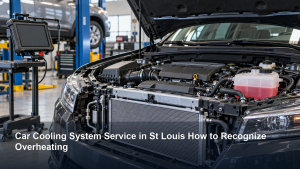
Open hood and visible radiator components in a clean St Louis auto repair bay
The short answer
Car cooling-system service helps the engine maintain a workable temperature as it runs and carries heat away from combustion. A cooling system commonly includes coolant, hoses, a radiator, a thermostat, a water pump, a fan, and a pressure cap; the exact design varies by vehicle. A rising gauge, warning light, steam, sweet odor, or visible leak can signal a problem, but the symptom alone does not identify the failed part. Do not open a hot radiator cap or continue driving an overheating vehicle. Jammin’ J Auto in Overland lists cooling-system service alongside engine repair and diagnostics. A technician can inspect the vehicle, test relevant components, and explain whether a repair is urgent. This guide offers general information; the owner’s manual and an in-person inspection matter for an individual car.
What the cooling system does
The engine produces heat while running, and the cooling system moves that heat away from components that can be damaged by excessive temperature. Coolant circulates through passages in the engine and radiator, while airflow and a cooling fan assist heat transfer. A thermostat helps regulate circulation as the engine warms. These parts work together, so a symptom may originate in more than one place.
A useful way to evaluate what the cooling system does is to connect it to the decision the reader is trying to make about cooling-system service, coolant leaks, radiator and thermostat diagnosis, and safe next steps. For drivers who notice a rising temperature gauge, coolant leak, or overheating warning, broad labels are less helpful than the relevant facts: what happened, when it happened, what records exist, and which conditions could change the answer. Organizing those facts helps the responsible professional explain what is confirmed, what still needs checking, and which next step fits the situation.
Warning signs that deserve attention
A temperature gauge climbing above its usual range, an overheating warning, steam, coolant under the vehicle, a sweet smell, or repeated low-coolant warnings can justify inspection. Cabin heat that suddenly turns cold while the engine temperature rises may also signal a circulation problem. The pattern and timing help a technician investigate; none of these signs proves that the radiator alone is faulty.
The setting matters when considering warning signs that deserve attention. Coolant leaks, thermostat and fan checks, radiator flow, pressure testing, and engine temperature symptoms Those details can change timing, scope, eligibility, or how a result should be interpreted. A reader should distinguish what is generally true from what applies to their own circumstances. Sharing the background early gives the provider a chance to identify missing information, explain limits, and avoid drawing conclusions from an incomplete record.
What to do when the temperature rises
If the gauge enters a danger zone or a warning appears, reduce load and find a safe place to stop. Turn off the engine and follow the owner’s manual. Steam or liquid may cause burns, so do not reach into the engine bay or remove a pressure cap while hot. If the temperature does not return to normal, the vehicle leaks coolant, or the warning repeats, arrange professional help instead of driving on.
Before choosing an approach, compare the expected benefit with the practical requirements. In this case, what to do when the temperature rises is connected to cooling-system service, coolant leaks, radiator and thermostat diagnosis, and safe next steps, but the right route may depend on available evidence, access, cost, timing, and the reader’s priorities. Asking which factors actually change the decision makes a consultation more useful than trying to solve every possible issue at once.
Why coolant leaks need a source diagnosis
A puddle may come from a hose, radiator, water pump, reservoir, heater circuit, or another component. Coolant can also escape only under pressure or evaporate on a hot surface, leaving little evidence on the ground. A technician can inspect connections and use appropriate pressure or dye testing when suitable. Replacing a visible hose without checking why it failed may leave another leak or underlying issue unresolved.
A written record can make follow-up more accurate. Note the dates, instructions, contacts, estimates, test results, approvals, or changes that relate to why coolant leaks need a source diagnosis. For drivers who notice a rising temperature gauge, coolant leak, or overheating warning, that record helps separate a new development from an earlier condition and gives the provider something concrete to review. Keep private information secure and share it only through an appropriate channel.
How a technician approaches overheating
Diagnosis usually starts with the vehicle history, warning conditions, fluid level, visual inspection, and a scan for relevant trouble codes. The technician may check fan operation, thermostat behavior, radiator flow, cap pressure, pump function, and signs of combustion gases or internal leakage as appropriate. The specific tests depend on the symptoms and design. Accurate testing helps distinguish a failed part from a result of a different problem.
Terms that sound straightforward can cover different situations. When the discussion turns to how a technician approaches overheating, ask what the word means in this specific setting, what is included, and what falls outside the scope. The answer matters because cooling-system service, coolant leaks, radiator and thermostat diagnosis, and safe next steps may involve separate stages or decision-makers. Clear definitions reduce mismatched expectations and make written instructions or estimates easier to compare.
Coolant condition and service intervals
Coolant protects against freezing, overheating, corrosion, and deposits, but chemistry differs among vehicle manufacturers. Mixing incompatible fluids or using an incorrect concentration can cause problems. Follow the owner’s maintenance schedule and product specification rather than relying on color alone. If the fluid is contaminated, rusty, oily, or repeatedly low, ask the shop to identify the cause and explain whether service or repair is recommended.
Timing can affect the choices available. A routine question about coolant condition and service intervals may allow time to gather records and compare options, while a deadline, worsening symptom, active leak, or scheduled launch can require a faster response. Tell the provider what dates or changes matter. The provider can then explain which timing is flexible and which part should be addressed promptly.
Hoses, belts, fans, and pressure components
Hoses carry coolant through the system and can soften, swell, crack, or leak as they age. Some water pumps are driven by a belt; electric fans rely on sensors, relays, and control circuits. A faulty cap may prevent the system from maintaining pressure. The inspection should account for the whole circulation and heat-rejection path, including related electrical and drive components, rather than treating every overheating event as a radiator replacement.
An online explanation cannot inspect the individual facts behind hoses, belts, fans, and pressure components. It can help a reader recognize the right questions, but it cannot verify documents, equipment, symptoms, code, or site conditions. The most reliable next conversation identifies cooling-system service, coolant leaks, radiator and thermostat diagnosis, and safe next steps, shares the relevant background, and asks who is qualified to interpret it. That boundary protects readers from treating a general description as a personal answer.
Why topping off is not a complete repair
Adding the correct coolant may temporarily restore a low level, but it does not explain why fluid was lost. Repeated topping off can conceal a developing leak and create risk if the engine is opened while hot. If the owner’s manual allows an emergency check after the engine cools, use the specified reservoir and fluid guidance. Record how often the level drops and tell the repair shop.
Different options can be reasonable for different reasons. Ask what alternatives were considered, what tradeoffs each one brings, and what information would change the recommendation. For why topping off is not a complete repair, this comparison should account for Vehicle designs and coolant specifications vary. Follow the owner’s manual, avoid hot coolant components, and have active overheating assessed promptly. A clear explanation does not require the reader to make an immediate choice; it gives them enough context to understand the consequences and decide what follow-up is needed.
How local driving affects cooling demands
Stop-and-go traffic, long highway trips, steep grades, towing, hot weather, and idling with limited airflow can expose weaknesses differently. A fan problem may show up in traffic; a partial restriction may become clearer under load. St. Louis drivers should describe the conditions around the warning, including outdoor temperature, route, speed, and whether air conditioning or towing was involved. A repeatable timeline can help the technician reproduce the symptom.
Local details can influence the practical process even when the underlying principles are similar. In Overland and the St. Louis area, the reader may need to confirm service coverage, appointment location, court or filing venue, parking and access, or the local professional responsible for the work. Verify those details directly with Jammin’ J Auto. Accurate local information helps people reach the correct office or service without assuming that every location follows the same process.
What to ask before authorizing cooling-system work
Ask which test identified the problem, what evidence supports the recommended part, whether the system needs a pressure or leak test, and what related components were checked. Request an estimate that separates diagnosis, parts, labor, coolant, and any additional work. If a repair is urgent for safe operation, ask why. Jammin’ J Auto says it provides vehicle checks and recommendations with many services; confirm what is included in the specific appointment.
A good handoff identifies who owns the next action. After reviewing what to ask before authorizing cooling-system work, clarify who will provide records, approve a change, interpret a result, schedule the work, or contact another professional. For drivers who notice a rising temperature gauge, coolant leak, or overheating warning, naming that responsibility reduces delays and duplicated effort. If the first plan changes, record why it changed and what new information led to the update.
Preventive maintenance and records
Keep service receipts that identify the coolant type, work performed, and date or mileage. Follow manufacturer intervals, investigate recurring fluid loss, and have leaks addressed before a long trip. Do not use stop-leak products without professional guidance because they may affect narrow passages or future service. A history of prior repairs can save diagnostic time and help a technician determine whether a repeated symptom points to a new failure or an incomplete earlier repair.
The limits of a recommendation are as important as its benefits. The answer may depend on Vehicle designs and coolant specifications vary. Follow the owner’s manual, avoid hot coolant components, and have active overheating assessed promptly. Ask what would make the proposed approach unsuitable, what warning signs require a different response, and when the issue should be reviewed again. This keeps the discussion realistic and gives readers a way to recognize when new information deserves attention rather than relying on a plan that no longer fits.
When to book with Jammin J Auto
Jammin’ J Auto is at 10188 Page Avenue in Overland and lists cooling-system service, engine repair, diagnostics, belts and hoses, and related maintenance. Call the shop to describe the vehicle, warning, and current condition before arranging service. If the car is actively overheating, ask about safe transport rather than driving it to the shop. Service decisions depend on the inspection, vehicle specifications, and the cause of the temperature rise.
A useful way to evaluate when to book with jammin j auto is to connect it to the decision the reader is trying to make about cooling-system service, coolant leaks, radiator and thermostat diagnosis, and safe next steps. For drivers who notice a rising temperature gauge, coolant leak, or overheating warning, broad labels are less helpful than the relevant facts: what happened, when it happened, what records exist, and which conditions could change the answer. Organizing those facts helps the responsible professional explain what is confirmed, what still needs checking, and which next step fits the situation.
A practical example for planning the service
Imagine a customer in Overland and the St. Louis area planning around cooling-system service, coolant leaks, radiator and thermostat diagnosis, and safe next steps. The customer gathers the facts that affect the request, explains the desired result, and asks the provider to confirm scope, timing, access, and cost before work begins. If an unexpected condition appears, the provider explains what changed and whether another trade, service, or decision-maker should be involved. Written details make it easier to coordinate the next step and avoid relying on assumptions.
This example is hypothetical and does not describe a particular customer or promise a result. It shows why the service conversation should connect the visible request to the conditions behind it. A clear estimate or plan should identify what is included, what is excluded, and which choices depend on an inspection or current availability. Readers can use the questions in this article to prepare, then rely on the responsible professional or business for a case-specific answer. The right scope depends on the actual circumstances.
Before confirming a date, verify contact details, the location, service duration, access requirements, payment terms, and any preparation or cancellation rules. Keep the written estimate or booking information available and tell the provider if the situation changes. If the work requires an inspection or depends on stock, weather, staffing, or site access, confirm how those factors affect the plan. A clear agreement helps both sides understand responsibilities and gives the customer a reliable way to ask questions during the process.
Frequently asked questions
Can I drive my car if the temperature gauge is high?
A high gauge or overheating warning can indicate a risk of engine damage. Stop in a safe place, shut the engine off, and follow the owner’s manual. Do not continue driving if the warning persists, steam appears, coolant leaks, or the vehicle behaves abnormally.
Can I open a radiator cap after the car overheats?
Do not open a radiator or pressurized coolant cap while the system is hot. Hot coolant and steam can cause severe burns. Let the vehicle cool and follow the owner’s manual; if you are unsure, seek professional help.
What causes a car to overheat in traffic?
Possible causes include inadequate fan operation, low coolant, a leak, a thermostat issue, restricted airflow, or another circulation problem. Traffic conditions can reveal problems that are less obvious at speed, but testing is needed to identify the cause.
Does low coolant always mean there is a leak?
A repeatedly low level should be investigated. A leak may be external or internal and can appear only when the system is hot or pressurized. The level should not routinely drop in a properly functioning sealed system.
How often should engine coolant be changed?
The interval and coolant type depend on the vehicle. Follow the maintenance schedule and fluid specification in the owner’s manual. Color alone does not establish compatibility, and mixing products can cause problems.
Can a bad thermostat cause overheating?
Yes, a thermostat that does not operate as intended can interfere with coolant flow. Other components can produce similar symptoms, so a technician should test the system before a part is replaced.
Why does my car smell sweet after driving?
Some coolant has a sweet odor. A smell may indicate a leak or spilled fluid, but it does not identify the source. If the smell accompanies a warning, visible leak, or falling coolant level, arrange an inspection.
What information should I give the repair shop?
Share the warning message, gauge behavior, when it occurs, recent repairs, coolant additions, visible leaks, odors, and driving conditions. A photo of the dashboard taken safely while stopped can preserve the exact warning.
Does Jammin J Auto service cooling systems in Overland?
Jammin’ J Auto lists cooling-system service and related engine work at its Overland location. Call 314-423-3876 to confirm availability, discuss the vehicle, and ask whether the car should be towed.
Will a coolant flush fix an overheating problem?
A flush is not a universal repair. It may be appropriate for a maintenance need or contamination, but overheating can come from a mechanical or electrical fault. Diagnosis should establish the reason before service is authorized.