
Car Air Conditioning Repair in Overland Missouri How to Diagnose Weak Cooling
Warm air from the vents can result from a low refrigerant charge, an airflow restriction, an electrical fault, or a mechanical problem. A careful diagnosis identifies the cause before parts are replaced or refrigerant is added.
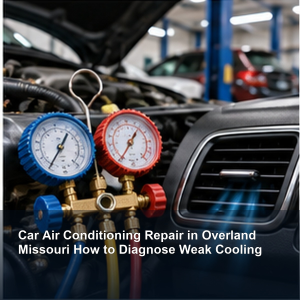
Automotive air conditioning gauges and car vent being inspected in an Overland repair bay, no people
The short answer
Car air conditioning repair in Overland begins with a symptom and ends with a system-specific diagnosis. If the air is weak, warm, intermittent, noisy, or accompanied by a warning light, the cause may be in the refrigerant circuit, compressor, condenser, fan, controls, blend door, cabin filter, or another component. A quick refrigerant top-off may temporarily change vent temperature but cannot explain why performance dropped, and incorrect refrigerant handling can be dangerous and harmful to the environment. Jammin’ J Auto lists air conditioning among its automotive services at its Overland location. A technician can identify the vehicle’s refrigerant type, test the system, explain findings, and provide an estimate before repair. This guide is general information; vehicle-specific service instructions control.
What the car air conditioning system does
Automotive air conditioning moves heat from the cabin to the outside air. Refrigerant changes pressure and state as it circulates through components such as the compressor, condenser, expansion device, and evaporator. Fans move air across heat exchangers, while controls direct airflow and regulate temperature. Because cooling depends on both refrigerant circulation and air movement, a complaint about warm air does not automatically indicate a refrigerant shortage. The vehicle’s age, design, climate-control features, and service history can all affect the inspection.
Symptoms drivers may notice
Common complaints include air that never becomes cold, cooling that fades in traffic, temperature that changes from side to side, low airflow, a musty smell, unusual cycling, or a sound when the system turns on. Fogged windows or a damp cabin can point to drainage or air-distribution concerns. Note when the symptom occurs: immediately after startup, only at idle, on hot afternoons, or after a long drive. That detail helps distinguish a constant performance problem from an intermittent electrical or airflow issue.
Check simple settings before booking service
Confirm the climate control is set to cooling, the temperature is low enough, the fan is operating, and the vents are pointed as intended. Some vehicles have separate driver and passenger settings, recirculation modes, eco modes, or automatic climate controls that change output. A blocked cabin filter can restrict airflow even when the refrigeration circuit is working. These checks do not diagnose a fault, but they help identify whether the complaint is related to a setting or a mechanical problem. Do not remove parts or handle refrigerant to test the system.
Why the cabin air filter matters
The cabin filter removes dust and debris from air entering the passenger compartment. A heavily restricted filter may reduce airflow and make cooling feel weak, even though vent temperature is low. Some vehicles place the filter behind a glove box; others use a different arrangement. The replacement interval and part depend on the model and operating conditions. If airflow has gradually declined or the system smells musty, ask whether the filter or evaporator area needs inspection. Replacing a filter will not repair a refrigerant leak, failed fan, or control fault.
How a technician checks vent temperature and airflow
A technician may measure vent output under defined conditions and compare it with ambient temperature, fan speed, and operating pressures. Results must be interpreted for the vehicle and current conditions; a single pressure reading or handheld temperature number is not a complete diagnosis. Airflow testing can help distinguish a restriction from a refrigeration problem. The shop may also check whether the system behaves differently at idle, while driving, or at different blower speeds. A clear estimate should explain which tests support the repair recommendation.
Refrigerant is not a routine top-off fluid
A sealed automotive air conditioning system should not continually consume refrigerant in normal operation. If the charge is low, a leak or prior service issue may be present. Adding refrigerant without locating a leak can hide the symptom briefly and allow the underlying problem to continue. Different vehicles use different refrigerants and oils, and they should not be mixed. The label under the hood and manufacturer information identify the correct specification. Ask the shop what quantity was recovered and installed and how it checked for leaks.
Why leak detection comes before recharge
Leaks can occur at hoses, seals, service ports, condenser connections, evaporator components, or other points. A technician may use approved electronic detection, dye where appropriate, visual inspection, or pressure testing, depending on the vehicle and suspected location. No single test is suitable for every leak or system. Repairing the leak and then evacuating and charging the system to the specified amount gives a more meaningful result than adding an unspecified amount. Ask whether leak testing is included and whether the estimate changes if the source is difficult to access.
Compressor, clutch, and electrical control problems
The compressor pressurizes refrigerant and may be driven by a belt or controlled electronically. A clutch, relay, pressure sensor, wiring, control module, or variable displacement mechanism can affect operation. A compressor that does not engage is not automatically failed; the system may be preventing operation because of pressure, temperature, or a control condition. A technician can check commands and electrical values before recommending a compressor. Replacing major components without addressing contamination, oil quantity, or the original cause can risk repeat problems.
Condenser airflow and cooling at idle
The condenser releases heat to outside air, often near the front of the vehicle. Debris, damage, restricted airflow, or a fan that does not operate correctly may reduce cooling, especially while the car is stopped. A driver may notice that the air improves once the vehicle is moving. That pattern is useful diagnostic information but does not confirm a specific failed part. Technicians can inspect the condenser and fan operation while considering other causes. Avoid reaching into fans; they may start automatically even when the engine is off.
Blend doors and uneven cabin temperatures
The climate system includes doors that direct air through or around the heater core and evaporator. A stuck actuator, broken linkage, calibration issue, or control fault may create warm air despite adequate cooling at the evaporator. Different temperatures on the left and right may reflect a dual-zone system or a problem with one side’s airflow control. A scan tool, actuator test, or inspection may be required. Explain whether all vents are affected and whether temperature changes when switching modes; this helps the shop reproduce the concern.
Odors, moisture, and unusual sounds
A musty odor can be related to moisture and microbial growth on surfaces within the air path, while a sweet smell may have another source and should not be assumed to be an A/C issue. Water under a vehicle after using air conditioning can be normal condensate, though water inside the cabin may point to a blocked drain or unrelated leak. Rattling, squealing, or clicking can come from a fan, belt, compressor, or another part. Describe the sound and when it occurs; a technician needs to inspect before attributing it to the A/C system.
Vehicle refrigerants and safe professional service
Many late-model vehicles use refrigerants with distinct fittings, equipment requirements, and handling precautions. EPA rules require paid motor vehicle A/C service involving refrigerant to be performed by properly trained and certified technicians using approved recovery equipment. Refrigerant should not be vented or mixed, and some alternatives have additional flammability concerns. Do not use a generic can or substitute refrigerant based on color, price, or an online video. The vehicle label and a qualified technician’s equipment determine the correct service process.
What to tell the repair shop
Share the year, make, model, mileage, recent repairs, warning lights, and whether the problem is constant or intermittent. Explain outside temperature, drive conditions, which vents are affected, and whether airflow or temperature changes with vehicle speed. Mention any prior refrigerant service or suspected damage after a collision. If the vehicle has dual-zone climate control or rear A/C, specify which areas are affected. Clear observations can help a technician reproduce the issue, but they do not replace testing.
Understanding an estimate and repair recommendation
Ask which tests have been completed, what they showed, and how they support the proposed repair. Confirm whether parts, refrigerant recovery and recharging, diagnostic time, seals, oil, and post-repair verification are included. If a leak or failed component is found, ask whether related components need inspection and what risks apply if the work is deferred. A shop should distinguish confirmed findings from possibilities and provide written approval steps for added work. Jammin’ J Auto says its inspection process can share photographs and detailed pricing; ask what documentation is available for an A/C concern.
How to maintain cooling performance
Follow the vehicle’s maintenance schedule and keep the front of the condenser free from obvious obstruction without damaging delicate fins. Use the climate system periodically as described in the owner’s manual, and replace the cabin filter at the prescribed interval or when inspection supports it. Address a new noise, leak, or loss of cooling before peak summer demand if possible. Do not interpret maintenance as a substitute for repair: a leaking or electrically faulty system needs diagnosis. Keep receipts and note the refrigerant specification and service date for future technicians.
Choosing an Overland auto repair appointment
When arranging service, ask whether the shop needs the vehicle for a full day, whether diagnostic fees apply, and whether it can inspect the system under the conditions that trigger the complaint. Bring prior repair records and the vehicle’s second key if needed for testing. Confirm hours, appointment availability, and how the shop will contact you with findings. Jammin’ J Auto is located at 10188 Page Ave in Overland and lists air conditioning repair among its services. Confirm current hours and service details directly before visiting.
Why a recharge without a test can mislead
A service machine may measure the amount of refrigerant recovered and compare it with the manufacturer’s specification. If the quantity is low, that is evidence about the system but not an explanation of how it became low. A leak may be small and intermittent, or a prior repair may have left an incorrect charge. An estimate that explains testing before charging helps a driver understand what will be done and why. Ask how the shop will verify the result after service, including whether it will check for leaks and confirm that cooling performance is restored.
When weak cooling may be a separate engine concern
The air conditioning compressor and condenser fan operate alongside other engine systems. A warning light, rising engine temperature, burning smell, or belt noise should not be treated as a simple cabin-comfort issue. Some vehicles reduce or disable compressor operation when engine conditions require it. If the temperature gauge rises or a warning appears, stop safely and follow the owner’s manual. Tell the repair shop about all dashboard alerts and symptoms, even if the main reason for the visit is warm air.
Plan around seasonal demand without delaying a safety issue
A/C appointments can become busy during the first sustained hot spell, so scheduling early may help with comfort and availability. But unusual noises, electrical smells, an overheating engine, or signs of a leaking fluid should be evaluated based on safety and severity rather than convenience. If you need the vehicle for work or family transportation, explain the deadline and ask what diagnostic time is realistic. A shop can distinguish a comfort concern from a broader vehicle issue once it inspects the car.
How to describe the problem during booking
When calling an auto repair shop about weak air conditioning, describe what the system does instead of guessing at a failed part. Say whether air is warm at startup or only after driving, whether the fan changes speed, whether the issue affects one vent or all vents, and whether any warning lights or unusual noises appear. Mention recent repairs, collisions, battery work, or periods when the vehicle sat unused. These details help the service adviser plan an appropriate inspection. Avoid asking for a refrigerant top-off as a diagnosis; low charge may signal a leak or another underlying issue that needs assessment.
Why a written estimate helps
Before authorizing repairs, ask for the diagnosed condition, proposed work, parts, labor, fees, and any additional testing that could change the estimate. Ask whether the estimate separates confirmed repairs from recommended maintenance. If the cause is uncertain, the shop should explain the diagnostic step and what decision follows the result. A written estimate makes it easier to compare options and understand what is covered. Keep the final invoice with maintenance records, including refrigerant or component work. If the same symptom returns, those records help the technician see what was previously tested or replaced.
Seasonal checks are not a substitute for diagnosis
A cooling system may be used heavily during warm weather and little during winter, but a seasonal check cannot establish the cause of an active fault by itself. If the system is not cooling, mention the symptom when scheduling and ask for an inspection rather than waiting for routine maintenance. Keep the cabin filter and vents unobstructed, but do not assume a filter change will solve every cooling complaint. The correct maintenance schedule depends on the vehicle maker’s guidance and vehicle condition. A technician can distinguish a comfort issue from a problem that needs repair.
Frequently asked questions
Why does my car blow warm air?
Possible causes include low refrigerant from a leak, compressor or fan trouble, an electrical or control fault, blocked airflow, or a blend door problem. The symptom alone does not identify the cause. A technician should test the system and explain the findings.
Should I add refrigerant myself?
Do not assume that a recharge is the repair. Vehicle systems use specified refrigerants and oils, and incorrect products can contaminate or damage equipment. Paid refrigerant service is regulated. Have a qualified technician identify the refrigerant, check for leakage, and charge the system to specification.
Why does my A/C cool while driving but not at idle?
The pattern may involve condenser airflow, a cooling fan, or another issue that appears when the vehicle is stationary. It is a useful clue, not a diagnosis. Tell the shop when the change occurs and ask them to test the system under similar conditions.
Can a dirty cabin filter make the air warm?
A restricted cabin filter usually reduces airflow and can make cooling feel weak. It does not necessarily change the temperature of air at the evaporator. A technician can check the filter and distinguish an airflow issue from a refrigeration or control problem.
How do I know whether the system has a refrigerant leak?
A falling charge, oily residue, or weak cooling may raise suspicion, but leaks can be hard to see. Shops use suitable detection methods based on the vehicle and suspected location. Ask whether the estimate includes leak diagnosis and verification after repair.
Is water dripping under my car after using A/C normal?
Clear water under the vehicle can be normal condensate from the air conditioning system. Water inside the cabin, a persistent wet carpet, colored fluid, or a strong odor should be inspected. Do not identify a fluid by appearance alone.
What should I bring to an A/C repair appointment?
Bring the vehicle details, prior service records, warranty information if relevant, and notes about when the problem appears. Mention noises, odors, warning lights, or past collision damage. These details help the technician reproduce the issue and interpret test results.
Why do vehicles use different refrigerants?
Refrigerant specifications vary by model year and vehicle design. The under-hood label identifies the required type and charge information. Refrigerants and oils are not interchangeable; never rely on color or a universal product claim.
What should an air conditioning estimate explain?
It should describe the diagnostic findings, proposed work, parts and labor, refrigerant and oil service, included verification, and how additional findings will be approved. Ask whether taxes, diagnostic time, and warranty terms are included before authorizing work.
Does Jammin’ J Auto repair car air conditioning in Overland?
Jammin’ J Auto lists air conditioning among its services at its Overland shop. Call the business to confirm current appointment availability, diagnostic process, vehicle coverage, and pricing.
Can I keep driving if the A/C stops cooling?
Loss of cooling alone may not make a vehicle unsafe, but a belt, fan, electrical fault, overheating condition, unusual noise, or fluid leak can indicate a broader issue. Stop if the engine overheats or a safety warning appears and consult a technician.
How often should automotive A/C be serviced?
Follow the vehicle maker’s maintenance schedule and have a concern inspected when performance changes. There is no universal requirement to recharge every year. A sealed system should not need routine refrigerant top-offs as though it were a consumable.