A car that pulls, wanders, or wears tires unevenly may need a professional inspection. Alignment is one possible cause, but steering, suspension, tire, and road conditions can create similar symptoms.
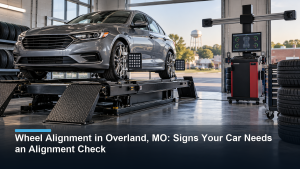
Sedan on a wheel alignment rack at an independent auto repair shop
The short answer
Drivers often search for wheel alignment in Overland or St. Louis after noticing a steering wheel that sits crooked, a vehicle that drifts, or tires that appear to wear unevenly. These observations are useful clues, not a diagnosis. Wheel alignment describes adjustment of wheel angles to manufacturer specifications; it is different from balancing a tire and does not repair worn suspension parts. Jammin J Auto lists wheel alignment and tire services among its Overland auto-repair offerings. This guide explains common symptoms, what an alignment check can reveal, what to ask a repair shop, and how to avoid replacing parts before the underlying issue is understood.
What a wheel alignment actually adjusts
A wheel alignment is a measurement and adjustment process that brings steering and suspension angles into the specification for a particular vehicle. The commonly discussed angles include toe, camber, and caster. They influence how tires meet the road, how the vehicle tracks, and how the steering returns after a turn. Not every angle is adjustable on every model, and alignment specifications vary by year, trim, suspension design, and sometimes load. A proper technician checks the vehicle information before deciding which values can be corrected.
Alignment does not mean that tires are balanced, rotated, or inflated; those are separate services. Balancing addresses vibration associated with wheel-and-tire weight distribution. Tire pressure affects how the tire contacts the road, while rotation changes tire position according to a vehicle-specific pattern. A driver may need more than one service, but replacing these terms with one another can lead to confusion. Ask the shop to explain what it measured, which values were outside specification, and what work is proposed.
Notice whether the vehicle pulls or drifts
A vehicle that consistently moves to one side on a level, straight road may warrant inspection. Before concluding that alignment is the cause, remember that road crown, crosswinds, tire pressure differences, tire construction, braking issues, and suspension wear can also influence direction. A brief drift on a sloped street may not indicate a mechanical fault, while a repeated pull under comparable conditions deserves attention. The driver should note when the symptom occurs and whether it changes during braking, acceleration, or a turn.
Do not let go of the steering wheel to test the car in traffic. Instead, describe the behavior to a technician and choose a safe route or controlled inspection. If the pull is sudden, severe, or accompanied by a warning light, vibration, unusual noise, or reduced control, stop driving when safe and seek professional guidance. A shop can inspect tire pressures, tire condition, steering and suspension components, and alignment readings rather than assuming one adjustment will solve every symptom.
Look for uneven tire wear
Tread that is more worn on one edge, across the center, or in a cupped pattern can signal a problem, but no single wear pattern proves misalignment. Incorrect pressure, worn shocks or struts, loose steering parts, driving habits, load, tire age, and irregular rotation can all affect wear. Compare tires across the vehicle and look for changes over time rather than relying on one quick glance. If the wear is severe or cords are visible, the tire may be unsafe regardless of the alignment reading.
A technician should inspect the tire condition and suspension before or during alignment service. Adjusting angles while a component is loose or damaged may not hold or may be unsafe. Ask whether the tires are suitable to keep, whether wear may have reduced their service life, and whether the alignment printout can be provided. A printout showing before-and-after measurements can help the owner understand the work, but it should be interpreted alongside the physical inspection and the manufacturer’s specifications.
Understand a crooked steering wheel
If the vehicle travels straight but the steering wheel remains noticeably off-center, the alignment may need attention. However, a crooked wheel can also follow steering or suspension repairs, tire changes, or a problem with steering-system components. The symptom should be described precisely: Does the wheel sit off-center all the time, or only while the car pulls? Does it happen after hitting a pothole? Has any work recently been performed? These details help the shop identify whether the steering wheel position and wheel angles are related.
A technician may need to center the steering wheel as part of a correct alignment procedure. Simply adjusting the wheel position without verifying all angles can mask a larger issue. If the car’s steering feels loose, binds, vibrates, or produces clunks, mention those symptoms too. Steering-system inspection and alignment measurement are related but distinct tasks; a vehicle that needs one may need the other, or a separate repair may be needed before adjustment.
After a pothole, curb strike, or collision
A hard impact can damage a tire, bend a wheel, shift alignment, or harm steering and suspension parts. A driver may first notice a new vibration, pull, steering-wheel change, or tire-pressure warning. Not every impact causes damage, but a sudden symptom after a pothole or curb contact is a strong reason to have the vehicle checked. If the tire has a bulge, cut, rapid pressure loss, or visible wheel damage, do not assume alignment service alone will make it safe.
Provide the technician with the location and approximate severity of the impact, any warning messages, and the symptoms that followed. The shop may inspect wheels and tires, suspension joints, steering parts, and underbody components before deciding whether to align. If a part is bent or loose, repair may be required first. A sensible estimate explains the evidence for each recommendation and distinguishes a necessary safety repair from optional maintenance.
When a wheel alignment is usually checked
An alignment check is commonly considered after steering or suspension repairs, tire-wear concerns, a noticeable change in handling, or an impact. Some vehicles or tire manufacturers recommend periodic checks, but there is no one schedule that applies to every car and every road. Review the owner’s manual and service history, and ask a technician whether a measurement is justified by the vehicle’s condition. Regular maintenance can catch developing symptoms, but an alignment should not be sold as a mandatory add-on at every visit without explanation.
A shop may offer a visual inspection or a measurement depending on the concern. If the customer reports a pull, the technician may first verify tire pressure and condition, then test or inspect other systems. If angles are within specification, the cause may lie elsewhere. A clear answer that alignment is not needed can be more valuable than an adjustment that does not address the complaint.
How alignment equipment and measurements help
Modern alignment equipment measures wheel position relative to the vehicle and compares it with defined specifications. A technician mounts targets or sensors, checks vehicle setup, records initial readings, and makes permitted adjustments. The machine is a tool, not a substitute for mechanical judgment. Damaged parts, incorrect tire pressures, a loaded vehicle, or incomplete preparation can affect the result. The technician must know whether the vehicle uses adjustable rear suspension, a thrust angle, or model-specific procedures.
Ask what the before-and-after report means and whether any values remain outside specification. If a reading cannot be corrected, the shop should explain why—perhaps a worn part, bent component, or design limitation is involved. The goal is not a green box on a screen; it is a safe, stable vehicle adjusted within the applicable specifications. A customer can request that the report be included with the invoice or sent electronically for future reference.
Why tires and suspension need to be considered together
Alignment readings interact with the condition of tires, springs, shocks, struts, bushings, ball joints, and steering links. A worn component can allow movement under load and change how the car tracks. A tire with irregular wear may continue to make the vehicle feel wrong even after angles are corrected. For that reason, an inspection may lead to a repair recommendation before an alignment can be completed. Ask what part failed, how the technician verified it, and whether the vehicle should be driven before repair.
It is reasonable to ask for photos when a part is difficult to see, but the explanation should stand on its own. A trustworthy estimate identifies the affected component, the symptom or safety concern, and the consequence of delaying the work. If the recommendation is unclear, request a plain-language walkthrough or a second opinion. Alignment should be performed after the relevant repair, not used to conceal looseness or damage in the system.
What to expect from an Overland alignment appointment
When scheduling wheel alignment service in Overland, describe the vehicle year, make, model, mileage, tire size if known, recent repairs, and the reason for the appointment. Mention any warning lights or impact. Ask whether the shop begins with a diagnostic inspection, whether it provides readings, and what conditions could require additional repair. If your car has special suspension modifications, a towing setup, or nonstandard wheels, disclose that before the visit because it may affect fitment or specifications.
At pickup, review the work order, ask what was adjusted, and take note of any follow-up recommendation. Test the vehicle only in a safe manner and contact the shop if the original symptom remains or new concerns appear. Jammin J Auto is located at 10188 Page Avenue in Overland and lists wheel alignment and tire services; confirm current hours, appointment availability, and service details directly.
How to reduce avoidable tire wear between visits
Check tire pressure according to the vehicle’s placard or owner’s manual, not the maximum pressure printed on the tire sidewall. Inspect tread and sidewalls regularly, and follow the vehicle-specific rotation schedule. Avoid ignoring repeated warning lights, steering changes, or new vibrations. If the car carries unusual loads or tows, use the guidance for that use case. These habits do not eliminate alignment needs, but they help owners notice changes earlier and provide useful history when a problem appears.
Record tire installation and rotation dates along with service invoices. When wear appears uneven, take a photo and note the mileage, but do not delay replacing a tire that is damaged or no longer safe. A vehicle that tracks straight today can still develop an issue after a future impact or component failure. Routine observation paired with professional inspection is more useful than guessing from a single symptom.
Compare estimates with clarity rather than price alone
Alignment prices vary with vehicle type, local labor, equipment, and whether the job includes inspection or additional adjustment. A very low advertised price may not include correction for all axles or may assume no repairs are needed. A higher estimate may include work beyond the alignment itself. Ask for an itemized estimate, whether parts or diagnostic time are separate, and what the shop will do if readings are already within specification.
Compare the completeness and clarity of the explanation as well as the quoted total. The right service is the one that addresses the actual condition safely and transparently. If a shop identifies a damaged part, ask whether it is urgent, how it affects handling, and whether the alignment should wait until that repair is complete. Clear communication protects both the driver and the vehicle.
A practical decision rule for drivers
If your car repeatedly pulls, the steering wheel is off-center, tires show uneven wear, or the handling changed after an impact or repair, request an inspection rather than assuming a specific fix. If none of those signs is present, follow the manufacturer’s maintenance guidance and discuss alignment checks during routine service when appropriate. A professional can tell you whether the measurements support adjustment or whether another issue needs attention.
For local drivers, choosing a shop that explains the inspection, provides a reason for recommendations, and answers questions plainly makes the process less stressful. Jammin J Auto offers auto repair in Overland, including tire and wheel-alignment services. Ask the shop to confirm current scheduling, vehicle coverage, and estimate details for your specific car.
What to do when symptoms return after service
If the vehicle still pulls or the steering wheel remains off-center after alignment, call the shop and describe exactly what changed. Note whether the symptom is identical, milder, or new; whether it appears at all speeds or only while braking; and whether road conditions may affect it. Do not assume that another alignment is automatically the right fix. The technician may need to recheck tire pressure, confirm the original readings, inspect a component that was not apparent during the first visit, or consider a separate brake or tire issue.
Keep the invoice and alignment report together with the mileage and date. If a new noise, loose steering, warning light, or worsening pull appears, stop driving when safe and ask for professional advice. A clear follow-up lets the shop distinguish an adjustment concern from a new condition and gives the owner a record of what was tested. A repair conversation should explain the next diagnostic step and any additional cost before work proceeds.
Frequently asked questions
What are the signs that a car needs a wheel alignment?
Common clues include persistent pulling on a level road, an off-center steering wheel, uneven tire wear, or a handling change after an impact or repair. These symptoms can have other causes, so an inspection is needed to confirm the problem.
Does a wheel alignment fix a vibration?
Not always. Vibration may come from wheel balance, tire damage, a bent wheel, suspension components, or other mechanical concerns. Describe when the vibration occurs so a technician can inspect the correct systems.
How often should I get an alignment?
There is no universal interval. Follow the owner’s manual and consider a check after suspension or steering work, a hard impact, or symptoms such as pulling or uneven tire wear.
What is the difference between wheel alignment and tire balancing?
Alignment adjusts wheel angles to vehicle specifications. Balancing addresses uneven weight distribution in the wheel-and-tire assembly that can cause vibration. They solve different problems.
Can bad alignment wear out tires?
Misalignment can contribute to uneven or accelerated tire wear, but pressure, rotation, suspension condition, driving, and road impacts also affect wear. Inspect tires and vehicle condition together.
Should I align my car after replacing tires?
New tires do not automatically require alignment, but an alignment check may be useful if the old tires wore unevenly, the car pulls, or steering or suspension work was done. Ask the technician to explain the reason.
Can I drive with a car that pulls to one side?
A mild, stable symptom should be evaluated soon; a sudden or severe pull, damaged tire, loose steering, or loss of control can be unsafe. Stop when safe and seek professional help if handling is compromised.
Does a pothole always knock a car out of alignment?
No. Some impacts cause no measurable change, while others damage tires, wheels, steering, or suspension. A new symptom after an impact is a reason to have the vehicle inspected.
What should an alignment report show?
A report typically shows measured angles before and after service against vehicle specifications. Ask the technician to explain any values that could not be adjusted and whether related repairs are needed.
Does Jammin J Auto provide wheel alignment in Overland?
Jammin J Auto lists wheel alignment and tire services at its Overland location. Confirm current appointment availability, vehicle fitment, pricing, and service details directly with the shop.
Why would a shop recommend repairs before alignment?
Loose or damaged steering and suspension parts can prevent an adjustment from holding or make the vehicle unsafe. The shop should identify the affected part and explain why repair is needed first.
Can tire pressure make a car drift?
Unequal or incorrect tire pressure can affect handling and tire contact, and may contribute to a pull. Check pressure using the vehicle’s recommended values, but have persistent symptoms inspected.