- Key Takeaways
- Olivette’s Driving Demands
- Your Brake’s Language
- Beyond The Pads
- The Local Standard
- Your Financial Safety
- Choosing Your Mechanic
- Conclusion
- Frequently Asked Questions
- What signs mean I need brake service in Olivette, MO?
- How often should I have my brakes inspected?
- Do I need full brake pad replacement or just resurfacing?
- How much will typical brake repairs cost in Olivette?
- Are aftermarket brake parts safe for my car?
- Can poor brakes affect vehicle safety inspections in Missouri?
- How do I choose a trustworthy brake shop in Olivette?
Key Takeaways
- Follow a local maintenance schedule tuned to Olivette driving patterns to safeguard brakes from stop-and-go, hilly streets and winter salt. Schedule inspections at seasonal changes and following long city commutes.
- Don’t ignore your brake’s warning signs such as noises, pedal softness or pulsation, dash warnings, visual fluid leaks or burning smells. All these can cause your brakes to become less effective, have increased stopping distance or even fail.
- Don’t stop at pads; have us check brake fluid quality, rotor thickness and runout, caliper function, and lines for corrosion or leaks. When multiple components are worn, request a complete brake job.
- Take advantage of Olivette shops utilizing digital diagnostics, ABS and EV-capable tools, and ASE-certified technicians. Request inspection photos, road test findings, and written recommendations prior to authorizing work.
- Opt for preventive services such as seasonal brake checks, fluid flushes, and rotor measurements to reduce long-term repair costs. Shop around for itemized estimates and warranty terms from several local shops.
- When looking for reliable, timely brake repair in Olivette, pick a shop that values transparency. Reviews, clean facilities, parts sourcing options, and clear warranty coverage are important factors to consider.
Auto and brake repair Olivette, MO refers to local services for vehicle maintenance and brake systems in the Olivette area of St. Louis County. Shops there provide brake pad and rotor replacement, hydraulic line inspections, ABS diagnostics, and state safety inspection preparation.
Our technicians utilize DOT-compliant parts and adhere to area service standards for SUVs and compact cars that populate suburban traffic. Trusted shops, cost ranges, and seasonal tips for residents are below in our guide.
Olivette’s Driving Demands
Olivette is located within the St. Louis metro area, where driving demands run from moderate to high depending on the highways, local construction, and mixed urban-suburban traffic. The city’s road layout, rush-hour peaks, schools, and shopping centers create frequent stops, turns, and speeds that define brake and auto care priorities for local drivers.
Seasonal Wear
Winter inspections are important here in Olivette because of road salt and cold weather stretches with temperatures below freezing. Both of these factors can increase brake line leaks and rotor rust. Check brake fluid and pad thickness before and after the first snow and extended cold snaps to capture moisture-induced contamination or worn friction material.
Have your brakes checked routinely during each seasonal change. Small corrosion or a thin pad left unattended can translate into a much more expensive rotor or caliper job down the road. Extreme heat in summer and cold in winter both speed wear. Heat can glaze pads and reduce friction, while cold can thicken fluid and expose seals.
Local shops near me Auto and Brake Repair Olivette, MO suggest a complete brake system scan twice a year for city and close to interstate drivers.
City Commutes
For daily drivers dealing with stop and go traffic and short highway runs, schedule brake service every 10,000 to 15,000 miles or earlier if symptoms appear. Check pads, rotors and hoses at oil changes and at every tire rotation. Stop-and-go stops in city driving can cause brake fade and a soft pedal, particularly if the car is loaded or the fluid is older.
Listen for squeal, grinding, or pedal vibration during commutes. These are your stop-at-the-local-shop-ahead warnings. The stop-and-go, congested intersections, roundabouts, and parking requirements all place such demands on city drivers in Olivette that they will regularly strain brake parts more than rural drivers.
With Olivette’s driving demands, heavy traffic and construction contribute to stop-start strain. Such preventive checks are both practical and cost effective.
Hilly Terrain
Olivette’s rolling hills and those short, steep stretches put additional demands on rotors and calipers. Downhill braking heats up the system and will warp rotors if done incorrectly. After multiple downhill runs, test for rotor runout and caliper drag. Even the slightest ‘warp’ manifests as pedal pulsation or vibration.
Apply engine braking whenever possible and don’t ride the brakes to reduce rotor damage and pad life. If your vehicle regularly manages hills or loads, inspections should be more frequent. Every 5,000 to 7,500 miles might be prudent to ensure it meets Missouri safety standards and can stop a safe distance away.
Your Brake’s Language
Knowledge of Your Brake’s Language begins with local, straightforward advice for drivers in Olivette, MO. With the city’s mixed suburban roads, stop-and-go near Olive Boulevard and the occasional highway run toward I-170, it’s crucial to read warning signs early. Here are distinct ways to hear, experience, observe, and sniff out brake problems and what to do so you can hand over informative information to your go-to Auto and Brake Repair Olivette, MO store.
1. The Sounds
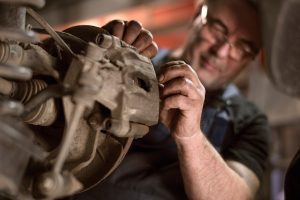
Squeaking or squealing upon brake application can be an indicator of worn-out brake pads or a pad wear indicator touching. Take note of when the noise occurs and at what speed. Grinding when stopping generally means either the pads are down to metal or the rotors are warped. Grinding risks scoring the rotors and makes it more expensive to fix.
Clicking or clunking could indicate loose calipers, broken hardware, or a stuck component that moves when it is loaded. Shrill repeat tones typically indicate thin pads or uneven pad wear needing replacement. If any noise continues while braking, get immediate brake repair from your local shop, and bring in recordings or notes about when the sound occurs.
2. The Feel
A soft, spongy brake pedal or excessive pedal travel could be an indication of air in the brake lines or low brake fluid. Both decrease stopping power and require immediate attention. Pedal pulsation, a vibrating pedal particularly during braking, typically indicates warped rotors or rotor runout and manifests most when stopping from higher speeds.
If the car pulls when you step on the pedal, anticipate uneven pad wear, a stuck caliper, or hydraulic imbalance. Suggest a road test with your mechanic to verify pedal feel and to determine if the problem is hydraulic or mechanical, or rotor wear.
3. The Sight
Check pads through the wheel, as thin means less stopping power and should be measured during service. Seek cracked or discolored rotors that are a sign of overheating or uneven wear. Check surrounding wheels for slick, wet marks indicating potential leaking brake fluid; any leak is an emergency.
Watch your dashboard brake warning lights and ABS lights; they help you quickly diagnose issues. Develop a checklist of obvious faults and miles since the last service. Here in Olivette, we recommend servicing at least annually or every 12,000 miles, and present that list to Auto and Brake Repair Olivette, MO for precise diagnostics.
4. The Smell
Your brakes’ language. That burning smell while or after you brake is overheated brakes or a sticking caliper and should be checked immediately to prevent rotor or pad damage. Chemical or sweet smells might indicate a brake fluid leak or hose failure.
The leaked fluid makes braking impossible. Lingering smells following hard stops mean you have something dragging or leaking and need immediate brake repairs. Note when the odor occurs and any recent driving conditions which will assist the shop in reproducing the problem.
Beyond The Pads
Brake work doesn’t stop at changing out friction. Effective Auto and Brake Repair Olivette, MO covers the whole hydraulic and friction system: lines, fluid, rotors, calipers, pads and hardware. Looking just at pads overlooks typical failure modes that increase cost and risk.
A full service job involves fluid pressure testing and flushing, rotor thickness and runout measurements, caliper functionality testing and brake line inspection for leaks and corrosion after our brutal winters with salt and sand on our local streets.
Fluid Health
Inspect brake fluid level and quality at each service, as low fluid or dark, thin fluid often indicates moisture contamination or system wear. Use a brake fluid tester to read moisture content and boiling-point drop. These testers provide a firm pass/fail for safety margins.
Plan a complete brake flush when fluid tests subpar or if the car is due per factory service intervals. Hybrids require hybrid-friendly brake fluid formulas because regenerative braking alters fluid thermal loads and system duty cycles. Low fluid or fluid with a high moisture content will cause a soft, sinking pedal or complete failure, so don’t delay if the pedal feels spongy.
Rotor Integrity
Measure rotor thickness, look for cracks, warps and bent lips. Technicians compare wear to manufacturer minimums. Rotor runout vibrates and makes the pads contact unevenly, increasing stopping distance and uneven pad wear.
Resurface as long as thickness and heat checks allow. Otherwise, replace to regain proper friction geometry. In Olivette, with all those hill stops and city stop-and-go, you wear out pads and rotors faster. So, anticipate rotor service more often than on highway-driven cars.
Rotor checks during brake inspections keep small issues from ballooning into big, expensive replacements.
Caliper Function
Examine calipers for leaks, seized pistons, slide pin rust and uneven squeeze. These all lead to rapid one-sided pad wear. Rebuild kits or full caliper replacements are necessary when boots split, pistons corrode or slide hardware binds.
Add caliper diagnostics to every brake inspection to spot sticking units before they cook the rotor or shred pads. Techs check pad thickness. Most shops stamp 3 to 4 mm as the minimum safe material, so caliper problems related to uneven wear are addressed promptly.
Lastly, brake line inspection falls under caliper checks because line leaks or rusted fittings are particularly perilous on older cars after salt exposure.
The Local Standard
Olivette shops have a local standard that starts with a complete check-up, accurate measurements and a road test to ensure safety and performance. This routine reflects Missouri’s requirement that every vehicle must have working brakes and it adapts to Olivette driving.
Stop-and-go traffic, short highway runs and close residential streets shape how brakes wear and how shops set service thresholds.
Diagnostic Tools
Olivette shops utilize advanced ABS diagnostics, electronic stability and brake control module scan tools, and dedicated electronic parking brake tooling. These tools read fault codes from wheel speed sensors, ABS pumps and the vehicle management system to identify issues such as intermittent wheel sensor or control module faults.
Digital inspection reports are the norm. Technicians take inspection photos of pads, rotors, lines and calipers and attach them to time-stamped reports which show measurements and recommended repairs.
Final road-test impressions, such as pedal feel, pull, noise, and ABS activation, are documented. When you pick a shop equipped with digital inspection tech, customers get clearer repair plans and fewer surprises.
Diagnostics include sensor faults, brake warning lamp triggers, and traction control system interactions. They will sometimes run manufacturer-level software to reset adaptive values and clear stored codes, particularly on vehicles with electronic parking brakes or regenerative braking.
Checking after fix verifies that the warnings are still cleared and that the car behaves the way it should.
Part Sourcing
| Part Type | Typical Warranty | Notes |
|---|---|---|
| OEM brake pads | 12–24 months | Direct fit, higher cost, model-specific |
| Quality aftermarket pads | 12 months | Cost-effective, vetted brands available locally |
| Rotors (OEM) | 12–24 months | Precision-machined for fit and balance |
| Reman calipers | 12 months | Quick replacement option for older cars |
Local stores carry OEM and quality aftermarket parts for domestic and import models. Sourcing locally reduces downtime.
Most shops are able to receive standard pads or rotors the same day or within 24 hours. Convenient proximity minimizes time spent without a vehicle and decreases the risk of cumulative harm from driving on damaged components.
Fast sourcing supports warranty expectations and makes repair timelines more predictable. Parts availability is important for reliability. A shop that includes warranty terms, brand names, and lead times gives customers the ability to decide between cost and longevity.
Request partial source information and delivery windows with rate when you book service.
Technician Training
Olivette technicians are typically ASE-certified and participate in ongoing education covering EV brake systems, regenerative brake diagnostics, and modern engine management interfaces.
Training includes hands-on calibration of electronic parking brakes, brake fluid moisture testing with boiling point assessment, and rotor thickness measurement protocols. Certifications count for simple pad changes and complex repairs.
Mechanics who record education detail why pads are suggested at 3 to 4 mm thickness, demonstrate brake line inspections for winter rust, and conduct back post-repair road testings.
Be sure to inquire about certifications and recent coursework when selecting a shop.
Your Financial Safety
Auto and Brake Repair Olivette, MO is important for more than just peace of mind. It impacts monthly budgets and ownership costs for years to come. Catch medical problems early and avoid underestimated costs with financial safety checks, high-quality care, and transparent pricing.
Here are targeted actions and numbers Olivette residents can apply to safeguard their wallet while maintaining their brakes.
Prevention Costs
- Annual brake inspection — $40 to $80 at local shops.
- Pad replacement (per axle) costs between $120 and $250 depending on the pads.
- Rotor resurfacing costs between $30 and $80 per rotor. Replacement costs range from $150 to $300 each.
- Brake fluid flush — $70 to $120.
- Brake hose/line inspection and small repair — $50 to $150.
- ABS system scan and minor service — $80 to $160.
Put a few seasonal checks into your car before winter and immediately after salt-heavy months to catch corrosion before it gets bad. A brief clinic or shop-run safety check can discover brake-line rust or small leaks that rapidly become large repair jobs.
Monitor dollars invested in these inspections versus major fixes prevented. Prompt attention can save hundreds to more than a grand based on your car. Track dates, mileage, and receipts to compare trends year over year and determine whether to maintain, fix, or trade in a car.
List typical preventive items in your owner log: pad thickness, rotor condition, fluid color, and any noise notes. Apply those specifics when you phone stores in Olivette for a faster, more precise quote.
Repair Costs
| Service | Typical cost range (USD) |
|---|---|
| Brake pad replacement (per axle) | $120 – $250 |
| Rotor replacement (each) | $150 – $300 |
| Caliper rebuild/replace | $200 – $450 |
| Brake line repair/replacement | $150 – $500 |
| Master cylinder replacement | $250 – $600 |
Obtain at minimum one written, itemized quote. No law says you need more than one estimate, but two or three local estimates typically show big differences in pricing.
Talk to shops in Olivette concerning parts quality and warranty policies, and look up the “Appraisal Clause” in your insurance coverage to assist in settling billing disagreements. Pricing depends on hourly labor rates, severity of damage, and OEM versus aftermarket parts.
If you hear a little squeal, steer carefully to a shop. Grinding, loss of pressure, or the car pulling to one side are indications to cease driving and check immediately.
Turning a deaf ear to sounds increases the risk of much more expensive bills and dangerous breaks on active Missouri highways. Many local merchants provide welcome discounts, free brake checks, and honest pricing.
Take advantage of them to mitigate your initial risk. Check warranty coverage and repair costs before signing any approval to make informed decisions.
Choosing Your Mechanic
Choosing where to take your car for Auto and Brake Repair Olivette, MO begins with clear priorities: proven skill, steady communication, and a focus on brakes. Begin by seeking out shops with a history of reliable work and clear credentials such as ASE certification. That’s proof the techs understand the systems they’re working on and repair standards.
For Olivette drivers, local experience matters. Shops that know the area’s driving patterns and seasonal conditions will be more apt to catch typical brake damage following highway trips or winter salt residue.
Evaluate shops through three quick lenses: reputation, facility, and staff. Check recent customer reviews for a track record of reliability and follow-up service. Walk into the shop if possible. Clean floors, ordered tool bays, and labeled parts speak volumes about meticulousness.
Discuss brake repair steps with staff and hear the clear, patient answers. Professionalism at the front desk and among technicians tends to correspond to repair work.
Choose your mechanic – Go for a shop that utilizes digital inspection reports and transparency. A mechanic who uses photos and videos to show worn pads, scored rotors or fluid leaks provides you with data to consider. Online reports ought to track defects, list recommended work, and provide cost breakdowns.
A good shop will walk you through the process, step by step, explaining options with pros and cons, such as resurfacing rotors versus replacing them, OEM versus high-quality aftermarket parts, and safety trade-offs.
Be sure to bring a competitor’s estimate for a second opinion. A local shop that’s willing to look over someone else’s estimate and walk you through the discrepancies can be invaluable in saving you money and unnecessary repairs. See if they will match or discount against that quote.
Some shops have specials for when you bring in a competitor’s quote. Inspect warranty provisions. A transparent parts and labor warranty safeguards your investment and indicates pride in craftsmanship.
Timing is everything for busy Olivette commuters. If your mechanic can provide same-day appointments or quick drop-off and pick-up, it will minimize inconvenience to your schedule. Write turnaround expectations on your mind before you turn over your keys.
Finally, weigh examples: a shop that texts a short video of a cracked caliper, offers two repair paths with costs, schedules the job for the afternoon, and backs work with a one-year warranty is preferable to a shop that gives verbal estimates without proof.
Use these concrete checks to select a shop that suits your requirements, schedule, and budget for Auto and Brake Repair Olivette, MO.
Conclusion
Local shops in Olivette keep brakes safe and cars reliable. Routine checkups detect thin pads, warped rotors, leaking lines and worn hoses. Clear signs make choices simple: grinding, pulling to one side, soft pedal, or dashboard lights ask for service now. Quality stores employ stamped components, transparent estimates and test drives on roads such as Olive Boulevard and Dielman. Budget plans and trade-ins soften price spikes. Choose a mechanic with consistent reviews, ASE techs and an in-writing warranty.
Example: A 2014 Camry with a soft pedal and pull was fixed in one visit with new pads, rotor resurfacing, and a brake fluid flush. Drive with more peace. Schedule a local brake check this month.
Frequently Asked Questions
What signs mean I need brake service in Olivette, MO?
Listen for squealing, grinding, increased stopping distances, a soft brake pedal, or a vibrating steering wheel. These are obvious indicators you require an immediate inspection.
How often should I have my brakes inspected?
Check your brakes at least annually or every 12,000 miles. Check earlier if you drive in stop-and-go traffic, on steep hills, or see warning lights.
Do I need full brake pad replacement or just resurfacing?
Technicians make the decision after measuring pad thickness and rotor condition. New pads are typical. Rotors can be resurfaced if they are within safe thickness and not warped.
How much will typical brake repairs cost in Olivette?
Anticipate $150 to $400 per axle for pad replacement. Rotor replacement costs an additional $200 to $500 per axle. Rates differ by vehicle, parts quality, and shop labor rates.
Are aftermarket brake parts safe for my car?
Good aftermarket parts from reputable brands meet or exceed standards and are safe. Ask your mechanic for OEM-equivalent parts and warranty information for reassurance.
Can poor brakes affect vehicle safety inspections in Missouri?
Yes. Worn brakes will cause inspection failure. Brake inspections help you pass safety checks and steer clear of fines or registration problems.
How do I choose a trustworthy brake shop in Olivette?
Choose a shop with ASE-certified techs, transparent written estimates, great local reviews, and a warranty. Seek out shops that talk you through problems and show you the worn parts.